
The Visible Life Principle
Wonderful concept, but can it be implemented?
I’ll admit before we start that even though I love this concept, and am working toward it, I am far from achieving it.
The idea of a visible life comes from Paul, writing to the church in Ephesus about the difference between living in the dark and living in the light:
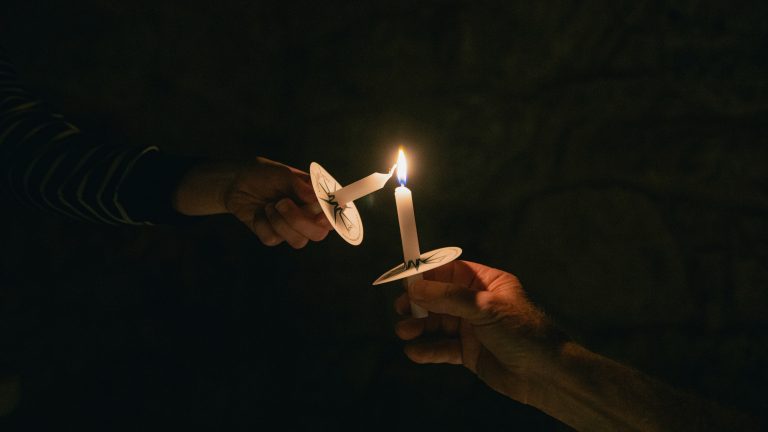
“For you were once darkness, but now you are light in the Lord. Live as children of light… Have nothing to do with the fruitless deeds of darkness, but rather expose them… But everything exposed by the light becomes visible—and everything that is illuminated becomes a light.” (Ephesians 5:8, 11, 13 NIV)
Our lives should ideally be so focused on God that we could open up every part of them to outside scrutiny. We shouldn’t have secrets, we shouldn’t have habits we’re ashamed of and hide, and we shouldn’t act one way at church, another at work, and another at home.
What would you do if no one could see you?
More than four hundred years before Paul wrote to Ephesus, Plato put a thought experiment into the mouth of Glaucon (Socrates’ brother, in Book II of the Republic) that has been bothering philosophy students ever since. A shepherd named Gyges, working for the king of Lydia, wandered into a chasm opened by an earthquake and found a hollow bronze horse with a body inside, larger than any man, wearing a gold ring. He took the ring, and later discovered that when he turned its setting toward his palm, he disappeared. He didn’t use this power to sneak an extra cookie. Within a fairly short paragraph he seduced the queen, killed the king, and took the throne.
Glaucon’s point was an uncomfortable one: people are honest mostly because they’re seen, and a good man given the same ring would probably end up doing the same things as a bad one. Take away the audience and you find out who someone really is.
I’d like to say he was wrong, though I’m not sure my own track record makes the case… most of us have a few things we do only when the door is closed, which is a small and fairly boring version of the same ring.
Scripture’s answer is interesting, because it doesn’t really argue with Glaucon. It just points out that the ring doesn’t work:
“Nothing in all creation is hidden from God’s sight. Everything is uncovered and laid bare before the eyes of him to whom we must give account.” (Hebrews 4:13 NIV)
So in one sense we’re already living a visible life, whether we like it or not. The principle is mostly about agreeing with what’s already true, and then, carefully, letting a few people see some of what God already sees.
The caveats (and there are some)
Secrets. We can and should keep some secrets: birthday and Christmas presents, whether or not you actually think your spouse looks a bit large in that outfit, our passwords, and so on.
Safety. This is a fallen world, and we shouldn’t be telegraphing things like “To all my social media followers: for the next week I’ll be vacationing in Tahiti. You all know my home address from other postings, and that my security system isn’t working. Don’t forget that I mentioned I bought my wife a very expensive antique jewelry box on our last anniversary.”
Privacy. There are family matters that don’t need to be discussed loudly at a restaurant.
None of those are what Paul is talking about, though. A surprise party isn’t a deed of darkness. The test is closer to this: is there anything in my life I’m hiding because it’s wrong, rather than because it’s private?
The front page of heaven’s newspaper
But with the caveats understood, wouldn’t it be amazing to live a fully visible life? To be so sold out for God that everything you do would be worthy of the front page of heaven’s newspaper?
Wouldn’t it be amazing to be so sold out for God that everything you do is worthy of the front page of heaven’s newspaper?
The second half of that Ephesians verse is the part I am leaning into now. Everything exposed to the light becomes visible, yes — but it also becomes a light. Paul isn’t only describing a spotlight that catches us out. He’s saying the things we bring into the open start giving off light themselves. A confession made honestly tends to help the next person who’s hiding the same thing. Most of us have seen that happen, sometimes with amazing results.
Where to start
This can be accomplished in part, and in stages, which is good news for those of us who are far from it.
Start at home. Sharing almost everything with your spouse can be healthy, and it’s probably the safest place to practice being fully known.
Find one person. Having an accountability partner you’re honest with goes a long way toward visibility. It’s hard to keep a habit in the dark when someone you trust asks about it every other Thursday. (More on this soon — it deserves its own post.)
Pick one room. Most of us don’t have a secret life so much as a secret corner — one app, one habit, one version of ourselves that shows up only in a certain place. You don’t have to throw every window open at once. Pick the one room you’d least want seen, and ask God to help you bring it into the light, maybe with that one trusted person.
Close the gap between rooms. Notice the difference between the Sunday version of you, the work version, and the at-home version. The goal isn’t to be the same volume everywhere; it’s to be the same person.
If you want somewhere to put this, the Walk section of the daily worksheet is built for exactly one small, real step at a time, and the Growth & Service areas sheet includes integrity as an area you can work on over weeks rather than days.
I’m not there yet. But I’ve noticed that every room I’ve opened up has been lighter afterward, and I don’t think that’s a coincidence.
Photo by Stephan Bechert on Unsplash
Discover more from God Operating System
Subscribe to get the latest posts sent to your email.